Businesses have to assess their fire risk by law. Most households never do, even though home fires are more common and more deadly than business fires. A home assessment takes minutes, and it can save your life.
Why a smoke alarm is not enough
Smoke alarm advice is good advice, but an alarm is one piece of the puzzle. For the best protection you also need to reduce the chance of a fire starting, know what you will do when the alarm sounds and have a way to deal with a small fire. There is no law that tells homeowners how to do that, so we created a free home fire risk assessment template to help.
The fire triangle
A fire needs three things. Take one away and it cannot burn.
- Ignition: faulty electrical equipment, cigarettes, candles, heaters, or anything else that can produce a spark or a flame.
- Fuel: paper, wood, rubbish, carpets, curtains and furniture.
- Oxygen: closed fire doors cut off the supply of air to a fire and slow its spread.
Work through the house room by room
| Room | What to check |
|---|---|
| Kitchen | Keep a fire blanket close by. Never leave cooking unattended. Keep the cooker and grill clean. See cooking with oil |
| Living areas | Heaters stable and away from furniture and curtains. Sockets not overloaded. Candles never left alight |
| Bedrooms | Close the door at night. Do not charge devices under pillows or on beds. See fire safety while you sleep |
| Hall, stairs and landing | Keep clear of shoes, bags and clutter so the escape route is always free |
| Garage and shed | Never keep petrol where people live or work. Keep gas cylinders upright, secured and not surrounded by clutter |
| Doors and windows | If they are locked, everyone must know where the keys are and how to open them quickly |
| Whole house | Do not let rubbish build up. Check furniture for the fire safety label |
Alarms, extinguishers and blankets
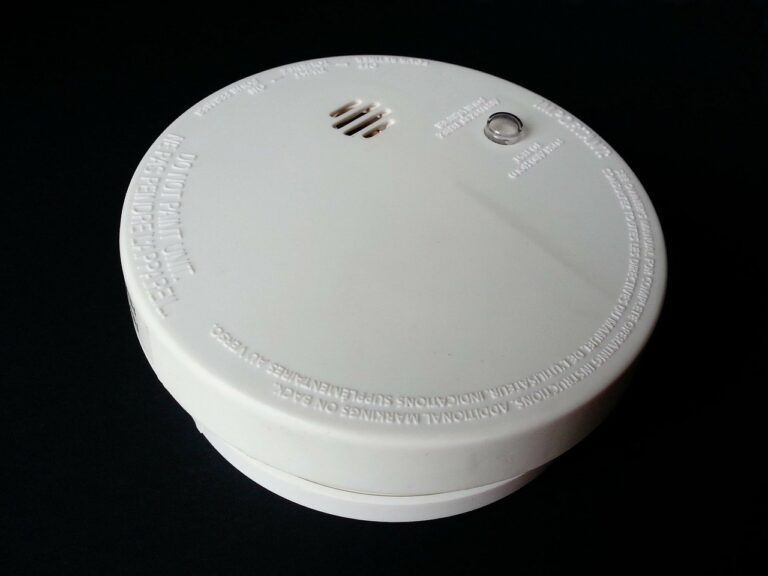
- Smoke alarms: fit at least one on every floor, ideally mains-powered with a battery backup, and test them weekly. Add a heat alarm in the kitchen.
- Fire extinguisher: small extinguishers are inexpensive and can control a fire in its early stages. See fire extinguishers at home for the right type and where to keep it.
- Fire blanket: kitchens are where most home fires start, so keep a blanket within reach of the cooker.
Make a plan and rehearse it
In an emergency there is no time for discussion. Decide now who does what, which exits you will use and where you will meet outside. Everyone, including children, should know the safest route without having to ask. Practise it. Our advice on fire safety at home has more.
If you are a landlord or run a business
A home template is not enough. Landlords and businesses must carry out a bespoke assessment of their premises and activities to keep people safe and meet the regulations. See our guides for landlords and workplaces, or book a professional assessment.
Free downloads
Download our free Risk Assessment Form and Risk Assessment Notes (PDFs) to work through this with your family. Spend a few minutes now, and check it again each year and after any change at home.
At work, it is worth finding out what fire safety measures your employer has put in place too.